Custom Maternity Leggings: Designing Supportive Fit for Pregnancy & Postnatal
- Share
- publisher
- bella
- Issue Time
- Sep 5,2026
Summary
Learn how to develop custom maternity leggings with pregnancy-specific fit blocks, supportive waistbands, adaptable fabrics, size grading, and real-wear testing.
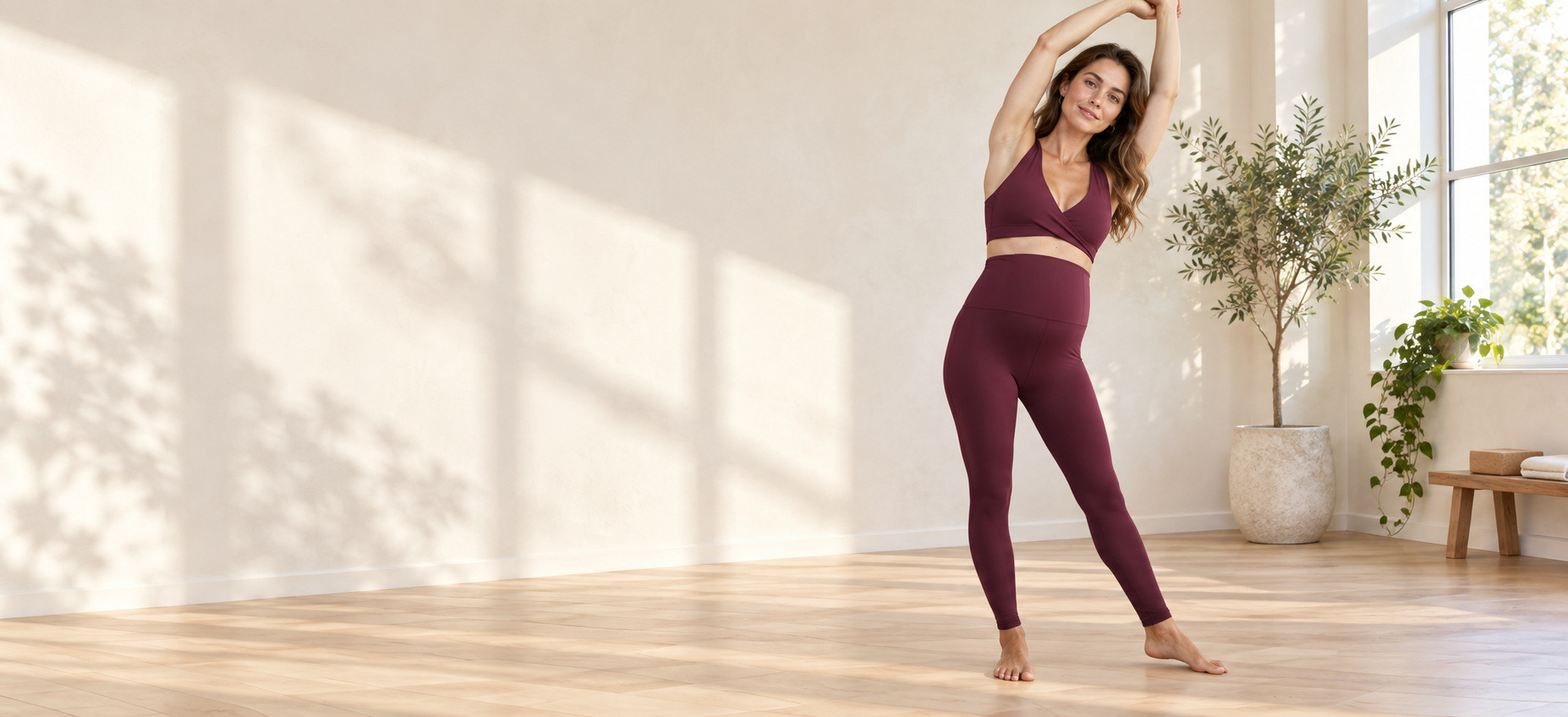
Custom maternity leggings need more than an extra-high waistband. Pregnancy changes abdominal volume, posture, hip shape, comfort sensitivity, and the way a garment is pulled on and worn. A successful product must adapt through these changes without rolling, digging in, becoming transparent, or losing recovery.
For activewear and maternity brands, the development challenge is to balance gentle support, stretch, coverage, and a secure fit across pregnancy and early postnatal wear. This guide explains the key design decisions to discuss with a maternity leggings manufacturer, from fit blocks and waistband structures to fabric selection, testing, sizing, and production.
Quick Answer: What Makes Custom Maternity Leggings Different?
Maternity leggings use a pregnancy-specific fit block, a waistband or belly panel designed for changing abdominal volume, and fabric with controlled stretch and recovery. The product should stay comfortable when sitting, walking, bending, and exercising while providing reliable coverage and avoiding concentrated pressure.
The best design depends on the intended trimester range, activity level, climate, customer size range, and whether the style is expected to continue into postpartum wear. These requirements should be written into the product brief before sampling begins.
Why Maternity Leggings Need a Different Fit Block
A standard women’s legging pattern is developed around a relatively stable waist, hip, rise, and torso relationship. During pregnancy, abdominal projection increases, posture may change, and customers may become more sensitive to tight elastic, bulky seams, and pressure points. Simply extending the waistband of a standard pattern often creates excess fabric at the back, pulling at the front rise, or a panel that slides down.
A maternity-specific block redistributes volume where it is needed. The front rise, belly curve, side seam, back rise, crotch shape, and waistband attachment must work together. The block should also consider how the garment will fit at different stages. A style intended for early pregnancy may need a different degree of expansion from one designed for the third trimester.
Define the Wearing Stage in the Product Brief
- Early pregnancy: a familiar legging fit with discreet adaptability and light support.
- Second and third trimester: more abdominal volume, secure panel coverage, and reduced pressure.
- Postnatal transition: soft support, comfort around a changing abdomen, and easy daily wear.
- Multi-stage product: enough adaptability to cover several stages without looking loose or feeling restrictive.
Brands should avoid medical promises unless the product has appropriate evidence and regulatory review. In most activewear programs, it is clearer to describe comfort, gentle support, coverage, and fit rather than claiming clinical benefits.
Over-the-Belly vs Under-Belly Waistbands
The waistband is the most visible difference between maternity leggings and standard leggings. Two main structures are common, and each serves a different customer preference.
| Waistband type | Advantages | Development points |
|---|---|---|
| Over-the-belly panel | Full abdominal coverage, smooth layering, adaptable support | Panel height, top-edge pressure, stretch direction, back-waist stability |
| Under-belly waistband | Less fabric over the abdomen, cooler feel, easier access | Front curve, grip without pressure, stability during movement |
| Foldable or convertible panel | Can be worn high or folded down for different stages | Bulk at the fold, recovery, seam comfort, clear wear instructions |
An over-the-belly panel should stretch around the bump without relying on a tight elastic at the top edge. The back section may need more structure so the leggings do not slide down. Under-belly styles need a carefully shaped front curve and enough anchoring at the side and back waist. For either option, the seam joining the panel to the legging body must remain smooth and comfortable.
Fabric Stretch and Recovery for a Growing Bump
Maternity activewear fabric must expand comfortably and return toward its original shape. Stretch alone is not enough. A fabric that stretches easily but recovers poorly may bag at the knees, loosen at the waist, or fail to support the garment after repeated wear.
Evaluate stretch in both directions, recovery after extension, opacity at the expected strain, surface pilling, colorfastness, moisture management, shrinkage, and hand feel. The belly panel may use the same fabric as the legging body, a lighter version of it, or a separate fabric selected for softness and adaptability.
For Daily Maternity Wear
Prioritize softness, breathability, easy movement, low seam irritation, and stable recovery after extended sitting and walking.
For Prenatal Movement
Consider moisture management, secure fit, coverage under flexion, seam durability, and a waistband that stays stable during low-impact activity.
For Cooler Seasons
Balance warmth with breathability. Brushed surfaces and heavier weights must still recover well and avoid excessive bulk around the panel seam.
For Postnatal Transition
Use soft, adaptable support and avoid rigid compression. Comfort requirements may change quickly during recovery.
Adding Custom Women’s Leggings to the Maternity Range
A maternity collection should feel connected to the rest of the brand. Colors, seam language, pockets, logo placement, fabric families, and styling can coordinate with existing custom women’s leggings while the maternity block remains technically distinct.
Brands can create a focused capsule rather than launching too many options. A practical starting range might include one everyday over-belly legging, one lighter prenatal movement style, and one cooler-season or plus-size option. Coordinating nursing bras, relaxed tops, or maternity shorts can extend the collection without duplicating the same function.
Bloomto’s maternity leggings styles provide starting references for high-waist, over-belly, breathable, and plus-size directions. Brands can also review our custom yoga wear collection when planning coordinated colors, fabrics, and extended sizing.
Postpartum Support: Gentle Compression and Comfort
Postnatal customers may want a legging that feels secure without becoming difficult to put on or uncomfortable around a sensitive abdomen. The safest product brief focuses on gentle, distributed support rather than aggressive compression. Fabric power, panel height, elastic tension, and seam placement should be assessed together.
A postpartum-oriented style may benefit from a soft high waist, flexible recovery, flat seams, and a fabric surface that feels comfortable for long periods. Avoid assuming that one support level will suit every customer. Consider offering clear fit guidance and more than one support option if the collection is large enough.
Fit Testing With Real Maternity Fit Models
A dress form or digital avatar helps with early pattern work, but it cannot replace wear testing. Real maternity fit models reveal how the panel behaves when the wearer sits, walks, bends, climbs stairs, and changes position. Whenever possible, test more than one pregnancy stage and more than one body shape.
Static Fit Review
Check waist and panel height, front and back rise, crotch placement, side seams, inseam, ankle opening, and overall appearance from several angles.
Movement Review
Test sitting, walking, bending, gentle squatting, and low-impact movement. Record rolling, sliding, pressure, transparency, seam irritation, and restricted motion.
Wear and Recovery Review
After extended wear and washing, check knee bagging, waistband recovery, dimensional change, pilling, color change, and seam stability.
Size Grading for Maternity and Plus-Size Customers
Maternity sizing should not be created by adding the same amount to every measurement. Abdominal projection, hip circumference, thigh shape, rise balance, and torso length do not increase at the same rate. The panel also behaves differently across sizes because a larger surface area changes tension and recovery.
Begin with the brand’s target-market body data and define the intended pregnancy stage for the base size. Then review the grade rules for front rise, back rise, belly width, panel height, hip, thigh, knee, inseam, and ankle opening. Plus-size maternity styles may require additional fit samples instead of relying on a single straight grade from a smaller base size.
Maternity Sample Approval Checklist
- The panel covers the intended area without a tight top edge.
- The waistband remains stable when sitting, walking, and bending.
- The front and back rise stay balanced without dragging the crotch.
- The fabric remains opaque at the belly, hip, and seat.
- Seams lie smoothly and do not create concentrated pressure.
- Pockets stay usable without pulling the side seam forward.
- The garment recovers after stretching and extended wear.
- The approved measurements are realistic for bulk-production tolerance.
Document fit comments with photographs, measurement references, and clear priorities. Separate essential corrections from optional preferences so the pattern maker understands what must change before the next sample. Once the fit is approved, seal the measurements, pattern version, fabric quality, trims, and construction details as the production reference.
Working With a Maternity Leggings Manufacturer
A suitable maternity leggings manufacturer should understand high-stretch apparel, pregnancy-specific pattern development, fabric recovery, size grading, and sensitive fit feedback. Ask for relevant samples and discuss how the factory separates standard legging blocks from maternity blocks.
Your development package should state the intended wearing stage, waistband structure, panel height, fabric requirements, support level, size range, activities, pocket details, branding, labels, packaging, and target market. Clear acceptance criteria make sample comments easier to implement.
Develop Your Maternity Leggings With Bloomto
Bloomto supports activewear and maternity brands with OEM, ODM, and private-label development. Our team can assist with maternity fit blocks, over-the-belly panels, fabric selection, size grading, logo applications, labels, packaging, sampling, and bulk production.
Review our custom leggings manufacturing service and send us your reference images, tech pack, target quantity, size range, and launch timing.
Discuss Your Maternity CollectionFrequently Asked Questions
What Is the MOQ for Custom Maternity Leggings?
MOQ depends on the selected fabric, color, construction, branding, and packaging. Bloomto’s standard custom programs can start from 100 pieces per style in one color, subject to the final specification and material availability. Confirm the size mix and component MOQs during quotation.
Can Maternity Leggings Share Fabric With Yoga Leggings?
Yes, when the fabric meets the maternity product’s stretch, recovery, opacity, softness, and comfort requirements. However, the panel may need a different weight or construction, and the maternity pattern must be developed separately. Test the fabric at the strain levels expected around the belly and hips.
Ready to Develop Custom Maternity Leggings?
Share your product concept, reference images or tech pack, target customer, size range, quantity, and launch schedule. Bloomto will review the requirements and help you plan the fit, fabric, sampling, and production route.
Send Your Maternity Leggings Brief